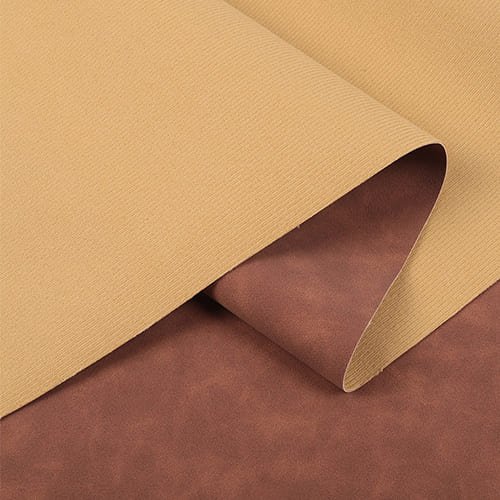
Material Comparison
Vegan Leather vs PU Leather: Which Is Right for Your Brand?
Vegan Leather vs PU Leather: Which Is Right for Your Brand?
In recent years, the fashion and accessories world has witnessed an ethical revolution—consumers and brands alike are demanding materials that spare animals and reduce environmental harm. At the forefront of this shift arevegan leatheralternatives and the more establishedPU (polyurethane) leather. Both promise “cruelty‐free” credentials, but they differ dramatically in performance, lifespan, cost, and ecological footprint.
Vegan leather spans plant‐based options (pineapple, apple, mycelium) and bio‐resins bonded to fabrics, offering an animal-free alternative but often lasting only 2–5 years under daily use. PU leather, a textile coated with synthetic polyurethane layers, delivers 5–7 years of abrasion and UV resistance at a lower cost, yet relies on petrochemicals and can emit VOCs.
When a young handbag startup pitched their debut line in vegan leather, they dazzled eco-influencers—but discovered after a scorching summer that the bags cracked at stress points. They switched to a high-performance PU blend with nano-coatings—and sales soared again. Ready to see which material fits your brand’s values and your customers’ demands? Let’s dive deep.
What Is Vegan Leather and How Is It Made?
Vegan leather includes a range of non-animal materials—plant fibers like pineapple leaves (Piñatex), apple pomace, bio-resins, or mushroom mycelium—bonded to textile backings and sealed under PU or bio-polymer coatings. These processes yield a leather-like surface without using hides.
The term “vegan leather” covers a wide spectrum of materials designed to emulate the look and feel of animal hide—without any animal input. Key categories include:
Plant-Based Leathers:Piñatex:Developed from pineapple leaf waste, Piñatex fibers are cleaned, dried, and laid into a non-woven mesh. This mesh is then coated with petroleum or bio-PU to seal and add grain. Each square meter upcycles 480 pineapple leaves otherwise burned or discarded.Apple Leather:Apple pomace—skins, cores, seeds left after juice extraction—is ground into a powder, mixed with PU binders, and rolled onto cotton backings. Brands like AppleSkin claim a 30% reduction in carbon footprint compared to PU.Mushroom Leather (Mylo):Grown in trays under controlled conditions, mycelium spreads into a mat which, once harvested, is tanned and finished with PU or bio-resins. Mylo factory trials show production cycles as short as 7 days versus months for cattle hides.
Piñatex:Developed from pineapple leaf waste, Piñatex fibers are cleaned, dried, and laid into a non-woven mesh. This mesh is then coated with petroleum or bio-PU to seal and add grain. Each square meter upcycles 480 pineapple leaves otherwise burned or discarded.
Apple Leather:Apple pomace—skins, cores, seeds left after juice extraction—is ground into a powder, mixed with PU binders, and rolled onto cotton backings. Brands like AppleSkin claim a 30% reduction in carbon footprint compared to PU.
Mushroom Leather (Mylo):Grown in trays under controlled conditions, mycelium spreads into a mat which, once harvested, is tanned and finished with PU or bio-resins. Mylo factory trials show production cycles as short as 7 days versus months for cattle hides.
Cork Leather:Harvested sustainably from cork oak bark, cork planks are ground and reconstituted into sheets with natural resin. Laminated to fabrics, cork leather is inherently water-resistant, antimicrobial, and hypoallergenic—but less pliable than hide.
Harvested sustainably from cork oak bark, cork planks are ground and reconstituted into sheets with natural resin. Laminated to fabrics, cork leather is inherently water-resistant, antimicrobial, and hypoallergenic—but less pliable than hide.
Waxed & Canvas-Based Leathers:Organic cotton or linen canvases can be impregnated with soy- or castor-oil-based bio-resins or waxes, creating a rugged, weather-resistant material. These options often appeal to eco-brands valuing fully bio-based inputs.
Organic cotton or linen canvases can be impregnated with soy- or castor-oil-based bio-resins or waxes, creating a rugged, weather-resistant material. These options often appeal to eco-brands valuing fully bio-based inputs.
Bio-Resin Innovations:Companies are pioneeringPine Oil PU,Bio-TPU, and evenAlgae-Based Leathers, each blending renewable feedstocks with traditional PU chemistry to reduce petrochemical reliance by 20–50%.
Companies are pioneeringPine Oil PU,Bio-TPU, and evenAlgae-Based Leathers, each blending renewable feedstocks with traditional PU chemistry to reduce petrochemical reliance by 20–50%.
Vegan leather’s plant-based variants often suffer from lower abrasion and flex durability (20–40k Martindale cycles vs. 80–120k for PU), can discolor under UV, and often require synthetic topcoats—diluting their “natural” appeal.
Lifespans range from 2–5 years under daily use, depending on material: Piñatex averages 3 years before visible fiber fray, Apple Leather holds 4 years, while mycelium leathers—still experimental—promise 5 years but lack long-term data.
What Is PU Leather and How Does It Differ in Composition?
PU leather is a synthetic textile—typically polyester or cotton—coated with multiple layers of polyurethane, then embossed for grain. Unlike vinyl (PVC) leather, PU is more breathable, flexible, and PVC-free, but remains a petrochemical product reliant on solvents.
PU leather—sometimes called “faux leather” or “synthetic leather”—dominates the vegan-leather market thanks to its established supply chains and predictable performance:
Base Fabric:Polyester Knit/Woven:Offers high tensile strength and dimensional stability.Microfiber (70% PU/30% Nylon):Mimics the microscopic structure of natural leather’s collagen fibers, resulting in a soft, “leather-like” handfeel.
Polyester Knit/Woven:Offers high tensile strength and dimensional stability.
Microfiber (70% PU/30% Nylon):Mimics the microscopic structure of natural leather’s collagen fibers, resulting in a soft, “leather-like” handfeel.
PU Coating Process:Knife Coating:Layers of liquid PU are applied via blade, achieving precise thickness (0.1–1.0 mm).Foaming:PU can be foamed with air or CO₂ to create a supple, leather-like cellular structure.Embossing:Heated rollers imprint grain patterns, from pebbled to smooth, giving the material depth and authenticity.
Knife Coating:Layers of liquid PU are applied via blade, achieving precise thickness (0.1–1.0 mm).
Foaming:PU can be foamed with air or CO₂ to create a supple, leather-like cellular structure.
Embossing:Heated rollers imprint grain patterns, from pebbled to smooth, giving the material depth and authenticity.
Chemical Composition:Polyol + Diisocyanate:The base reaction forming polyurethane. Traditional PU uses MDI (methylene diphenyl diisocyanate) linked to 1,4-butanediol polyols.Solvent vs. Solvent-Free:Solvent‐based PU offers deep penetration but emits VOCs; water‐based or hot‐melt PU reduces emissions but can cost 15–30% more.
Polyol + Diisocyanate:The base reaction forming polyurethane. Traditional PU uses MDI (methylene diphenyl diisocyanate) linked to 1,4-butanediol polyols.
Solvent vs. Solvent-Free:Solvent‐based PU offers deep penetration but emits VOCs; water‐based or hot‐melt PU reduces emissions but can cost 15–30% more.
Variants:Aniline PU:Thinner, more breathable, absorbs oils and stains more readily—prized for upholstery.Pigmented PU:Surface is pigmented and sealed, creating a barrier to moisture and wear—standard for handbags and footwear.
Aniline PU:Thinner, more breathable, absorbs oils and stains more readily—prized for upholstery.
Pigmented PU:Surface is pigmented and sealed, creating a barrier to moisture and wear—standard for handbags and footwear.
PU leather may peel or delaminate after 5–7 years, especially at high-flex areas. It relies on petrochemicals and solvents that can emit VOCs, and end-of-life recycling is challenging due to mixed-polymer structures.
How Do Vegan and PU Leather Compare in Durability and Performance?
In standardized tests, premium PU leather withstands 100,000 abrasion cycles and 50,000 flex cycles, whereas most vegan leathers range 20,000–40,000 abrasion and 10,000–25,000 flex cycles. PU also resists UV fading (up to 200 hours) and staining better than plant-based alternatives.
Durability and performance metrics are critical for customer satisfaction, warranty costs, and brand reputation:
Abrasion Resistance (Martindale):PU Leather:High-end grades surpass 100k cycles; mid-range 60–80k cycles.Vegan Leather:Piñatex and Apple Leather: 20–30k cycles. Mycelium: 25k cycles. Bio-resin waxed canvas: ~40k cycles.
PU Leather:High-end grades surpass 100k cycles; mid-range 60–80k cycles.
Vegan Leather:Piñatex and Apple Leather: 20–30k cycles. Mycelium: 25k cycles. Bio-resin waxed canvas: ~40k cycles.
Flex Fatigue (Dynamic Bend Test):PU Leather:Retains integrity after 50k–70k flexes without surface cracking.Vegan Leather:10k–20k flexes; beyond this, micro-cracks appear at folds, especially in low-cost or minimally finished variants.
PU Leather:Retains integrity after 50k–70k flexes without surface cracking.
Vegan Leather:10k–20k flexes; beyond this, micro-cracks appear at folds, especially in low-cost or minimally finished variants.
Tear & Tensile Strength:Vegan leathers often leverage the tensile strength of natural fibers (pineapple fiber: 55 MPa), but the PU coating’s adhesion typically limits ultimate performance to 15–20 MPa before delamination. PU leather substrates measure 25–30 MPa tensile, with coating contributing another 5–10 MPa.
Vegan leathers often leverage the tensile strength of natural fibers (pineapple fiber: 55 MPa), but the PU coating’s adhesion typically limits ultimate performance to 15–20 MPa before delamination. PU leather substrates measure 25–30 MPa tensile, with coating contributing another 5–10 MPa.
Water & Stain Resistance:PU Leather:Naturally hydrophobic and can be washed.Vegan Leather:Plant variants require periodic re-waxing or top-coat maintenance to maintain repellency; cork is inherently water-proof but susceptible to wear.
PU Leather:Naturally hydrophobic and can be washed.
Vegan Leather:Plant variants require periodic re-waxing or top-coat maintenance to maintain repellency; cork is inherently water-proof but susceptible to wear.
UV Stability & Color Fastness:PU with UV stabilizers holds color for 200+ hours in xenon arc tests; vegan materials often fade or yellow after 50–100 hours unless pigments and stabilizers are used—adding cost and complexity.
PU with UV stabilizers holds color for 200+ hours in xenon arc tests; vegan materials often fade or yellow after 50–100 hours unless pigments and stabilizers are used—adding cost and complexity.
What Are the Environmental Impacts of Vegan Leather vs PU Leather?
Vegan leathers can reduce animal agriculture impacts by 80%; plant-based variants lower carbon footprints by 20–50% versus PU leather. However, most rely on PU coatings still derived from fossil fuels, and end-of-life recycling remains problematic for both materials.
Environmental stewardship drives material choice:
Animal Leather Baseline:75 kg CO₂e/ft² of hide.
PU Leather:~20 kg CO₂e/ft².
Vegan Leather:Piñatex: 12 kg CO₂e (upcycled waste).Apple Leather: 15 kg CO₂e.Mycelium Leather: Projected <10 kg CO₂e with renewable energy inputs.
Piñatex: 12 kg CO₂e (upcycled waste).
Apple Leather: 15 kg CO₂e.
Mycelium Leather: Projected <10 kg CO₂e with renewable energy inputs.
Vegan:Plant-based substrates avoid chromium salts used in tanning hides—reducing water toxicity—but still use PU chemistries.
PU Leather:Involves solvent emissions (acetone, ethyl acetate) and energy-intensive polymerization.
Neither vegan nor PU leather is widely recycled due to mixed polymers.
Experimental depolymerization of PU and composting of pure plant leathers are in early stages but not commercial at scale.
Piñatex and Apple leather upcycle agricultural waste, diverting 50–100 tonnes of biomass per 10,000 m² of material produced.
How Do Price Points and Cost Structures Differ?
PU leather typically costs $5–$15 per square meter, making it the most budget-friendly “leather” option, while plant-based vegan leathers range $20–$50/m² depending on novelty (pineapple or mushroom). Cork and bio-resin canvases sit in the $10–$30/m² bracket. Real animal hides start around $30/m² and climb into the hundreds for premium full-grain. Your choice hinges on balancing upfront cost with brand positioning and performance requirements.
Understanding the cost dynamics of different “leathers” is crucial when planning product budgets, setting retail prices, or negotiating with suppliers. Let’s break down the material, manufacturing, and scale factors that drive price points for PU and vegan leathers—and see which is truly the cheapest leather.
Economies of Scale:At annual volumes >100,000 m², PU costs drop by 15–25%; small runs (<5,000 m²) see premiums of up to 30%.
At annual volumes >100,000 m², PU costs drop by 15–25%; small runs (<5,000 m²) see premiums of up to 30%.
Includes material, finishing, QC, and basic packaging—before shipping, duties, and branding.
[... article truncated ...]